The relevance of my research
My books are non-fiction works based not only on Mesopotamian texts but also on other ancient books. The findings are supported by archaeology and science. What distinguishes my work is that I relied solely on translations made by academics, real experts, in ancient languages. Some of them are Samuel Noah Kramer, John Maier, Jeremy A. Black, Benjamin J. Foster, Stephanie Dalley, William G. Lambert, Alan Ralph Millard, and George Smith, among others. They decoded many of the complex languages that are no longer in use, such as Sumerian. There are several translations for each text, and interestingly, they all coincide with the meaning of the texts.
The chronology of each event following the arrival of the Anunnaki gods was established to provide a comprehensive picture of everything that occurred in ancient times. The reliability of the chronology was confirmed using statistical and analytical methods. The timeline was specifically based on data from ancient literature and texts. We found corresponding equivalences in BCE for time nomenclature in both Mesopotamian texts (Sar) and Hebrew literature (Anno Mundi) dates. This facilitated pinpointing the time of events and finding correspondence in archaeological and scientific records.
Academic institutions have classified as mythology the parts of the texts that do not match the accepted and conventional history. Mythology is an invented word to designate literature that only deals with the gods, demigods, and legendary heroes. Our analysis was conducted under the premise that the Mesopotamian texts are not mythology, but rather ancient history. The chronology determined in this investigation led to the actual dates on which the events occurred. This, in turn, guides us to confirm them with archaeological and scientific evidence. For example, the day when the Exodus occurred (April 16, 1660 BCE). Ultimately, the overall evidence suggests a high probability that the stories in the texts are not fiction.
No other researcher has given these documents the merit they deserve. The stories in the Book of Genesis bear striking similarities to those found in Mesopotamian texts. A similar version was written thousands of years earlier for the creation story and the Great Flood. These facts prompted extensive research and analysis of the ancient texts. As a result, we uncovered a wealth of information. The texts reported the existence of the Anunnaki gods. The findings in this investigation indicate that it is not fiction, as scholars and authors have reported.
The Sumerian civilization
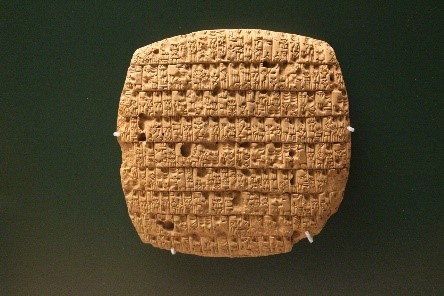
The Sumerian civilization was the first society to emerge more than 5,000 years ago in southern Mesopotamia. It was a civilization with advanced knowledge in science and technology. It laid the foundations for the society we enjoy today. Among the many achievements, a writing system called cuneiform stands out. They also developed a systematic method for recording information on clay tablets. The Mesopotamian texts currently excavated by archaeologists in modern times range from approximately 500,000 to 2 million tablets.
The largest collection is housed in the British Museum, which contains approximately 130,000 tablets. The remaining tablets are housed in various museums worldwide. The Vorderasiatisches Museum Berlin, the Louvre, the Museum of Archaeology in Istanbul, and the National Museum in Iraq. Including the Babylonian Collection of Yale and the University of Pennsylvania Museum of Archaeology and Anthropology.
The Library
Ashurbanipal was the last king of the Neo-Assyrian Empire. He was literate and fluent in both the Akkadian and Sumerian languages. His Library was a treasure trove of information. It was located at the archaeological site of Nineveh, the capital of Assyria, currently in northern Iraq. Archaeologist Sir Austen Henry Layard discovered it in the southwestern ruins of King Sennacherib’s palace in 1849. Three years later, his assistant Hormuzd Rassam discovered a similar collection on the opposite side of King Ashurbanipal’s palace.
The Ashurbanipal Royal Library includes the first literary texts. Scholars and scribes collected and copied the ancient texts from the Neo-Assyrian Empire, mainly Babylonian. The palace and library were destroyed by fire at Nineveh in 612 BCE. The high temperatures of the event helped to preserve the tablets. The collection in the British Museum consists of more than 30,943 tablets, most of which have not been translated.
Archaeologists dated the origin of the tablets to around the 30th century BCE. The Book of Genesis stories were compiled around the 10th century BCE. The similarities between the texts and Genesis suggest that they were used as a reference by the Hebrew scribes. The fact that heroes in the stories have different names and were written in various languages complicates understanding. In addition, the heroes of the stories are sometimes known by different names. Noah was known in Sumerian as Ziusudra, Utnapishtim in Babylonian, Xisouthros in Greek, and Atrahasis in Akkadian. It is the same story, the same hero, but in different languages, times, and cultures.
Seal Cylinders – Mesopotamian Texts
Sumerian remained the official language of documents for thousands of years. It was the first and only language on Earth. However, humanity began speaking and communicating in numerous languages around 5,500 BCE. This event is known as the Tower of Babel, which will be explained in detail in my book. The cuneiform system was used to record about 15 different languages. Some were Sumerian, Akkadian, Babylonian, Assyrian, Elamite, Hittite, Urartian, and Old Persian. After the demise of the Sumerian Empire, it continued to be used. Even as the spoken language disappeared from the daily lives of the people. Literacy was widespread among the population, and students studied and copied the Sumerian texts that later influenced Babylonian literature.
What distinguishes my work is that I can provide references and supporting evidence for all my proposals. No other writer on this subject will be able to provide this information. Readers interested in the subject can ask all their questions here on my website (via email) or on my social networks: Facebook, Pinterest, and Instagram. I will provide a detailed explanation of everything.
The book series “When the Anunnaki Gods Seized the Earth” offers a comprehensive analysis of this topic, encompassing all aspects related to our ancient past. It is a descriptive, detailed, engaging, and easy-to-understand book, featuring a detailed and vivid account. You will feel as though you are participating in the actual scene, just as I did while conducting this research. You will be surprised by the wealth of information. Get it now by clicking the links. For additional information, please refer to: https://ryannemaxinemeyersohn.com/